Digital infrastructure for the grassroots economy and community wellbeing
A map that makes the small economy visible — the corner shop, the rider, the person looking for work nearby — and puts the data behind it back in the hands of the people who generated it.
The World Health Organization is clear that health is not settled by genes and medicine alone. It is shaped by the conditions people live in — what they earn, whether they have steady work, where they live, how far they got in school, which services they can actually reach. The shorthand for this is the social determinants of health.
Which means economic inequality does not merely sit alongside health inequality — it produces it. When a handful of private platforms capture the opportunities in a neighbourhood, the falling income, the thinning security and the accumulating stress all land, eventually, on people's bodies.
Platformization, and what it costs a neighbourhood
Ordering dinner. Catching a ride. Finding a job. Buying and selling. One by one, the ordinary transactions of a day have moved onto digital platforms.
The gains from that shift are real. They are also unevenly shared. Platforms of this kind tend toward natural monopoly, and the leverage that gives them sits opposite everyone else in the transaction — the shop owner, the rider, the customer.
What that looks like on the ground
Delivery platforms take a large cut from restaurants, and the price of a meal goes up to cover it.
Riders and couriers see their rates cut while the rules they work under get tighter.
Small shops can't compete on these terms — and often never appear on the platforms at all.
The data a neighbourhood generates gets monetised by a company headquartered somewhere else entirely.
The structural issue
Platforms have become infrastructure
We now depend on digital platforms the way we depend on the power grid, the water supply and the road outside. The difference is who holds them: this infrastructure is privately owned, run for profit, and governed without any voice from the people who rely on it.
What's wrong with private platforms
The value leaves the neighbourhood
Local data earns money, and none of it comes back
Communities have no say in how any of it is run
The playing field tilts against small operators
How decisions get made stays invisible
What communities are asking for
A platform they own and run themselves
Data that's open, and useful where they live
A real seat at the table for everyone involved
A fair shot at the opportunity around them
Tools that leave the community healthier
Why ThaiEconoMap
The gap nobody has filled
Thailand's community economy is not weak. Cooperatives, community enterprises, savings groups, social enterprises — the institutions are there, and they work. What's missing is anything digital that connects them to each other, or makes what they do visible to anyone outside.
1Local shops and producers don't appear on any digital map, so the business goes elsewhere.
2People looking for work and employers a few streets away have no reliable way to find each other.
3What's known about a local economy sits scattered in a dozen places, so nobody can plan with it.
4There's no tool for lending, passing on or pooling what a community already owns.
5News, alerts and announcements travel by word of mouth, or they don't travel at all.
The thinking behind it
Two ideas hold the whole thing up
The solidarity economy
Social and Solidarity Economy (SSE)
An approach that treats social and environmental goals as the point of the exercise, and profit as a means to it. It runs on participation, decisions made together, and benefits that get distributed rather than extracted. The UN recognises it through the Sustainable Development Goals.
SDG targets 8, 10 and 12
A platform everyone owns
Digital Commons
Digital resources built, governed and shared by the people who use them — held in common rather than owned outright by anyone. It's the old logic of the commons (the village forest, the shared well, the grazing field) applied to data, software and the platforms built on top of them.
Data · software · platform
Owning it together is the point
A healthy community is made of the relationships inside it — whether people trust each other, whether they feel they belong, whether they turn up when someone needs help. That is what carries a place through a bad year.
ThaiEconoMap is built to give those relationships somewhere to happen. People build the platform, use it and look after it together — and that process is itself the health outcome, as much as anything the platform delivers.
“Not just building it. Not just opening it up. Everyone ends up owning it.”
Put the social determinants of health next to the solidarity economy and the digital commons, and the move that narrows the income gap is the same move that improves the odds of a healthier community.
What it does
Four tools, one map
Local business
Puts shops and small producers on the map with the details people actually need — how to reach them, when they're open, how to order.
Work nearby
Matches people looking for work with employers a few streets away, so a job doesn't have to mean a long commute or a middleman.
Notices
Gets news, events and emergency alerts around the neighbourhood while they still matter.
Sharing
A place to lend, pass on and pool what people already have — less waste, and more reason to know your neighbours.
What we expect to change
Three levels of change
Policy
A working example of a digital platform run as public infrastructure — and an evidence-backed argument for economic policy that shares the gains.
Community
A community keeps its own economic record, plans and allocates resources with it, and leans less on platforms it has no say over.
Individual
Small operators, workers and customers reach the opportunities around them more easily, and the income that follows is steadier.
From the field
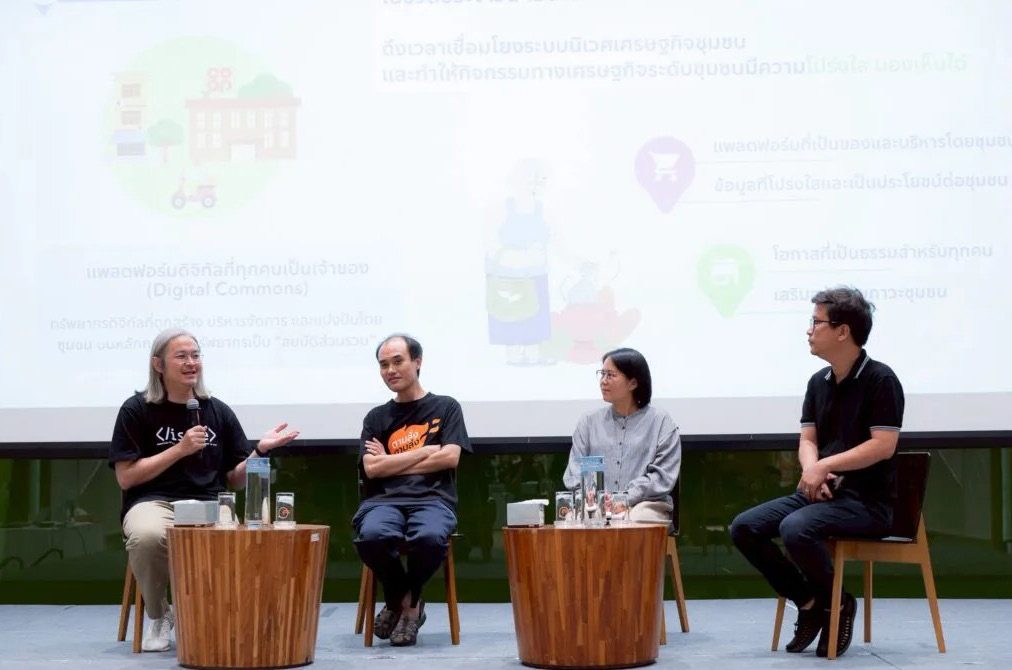
Opening the map: turning data into something a community can use
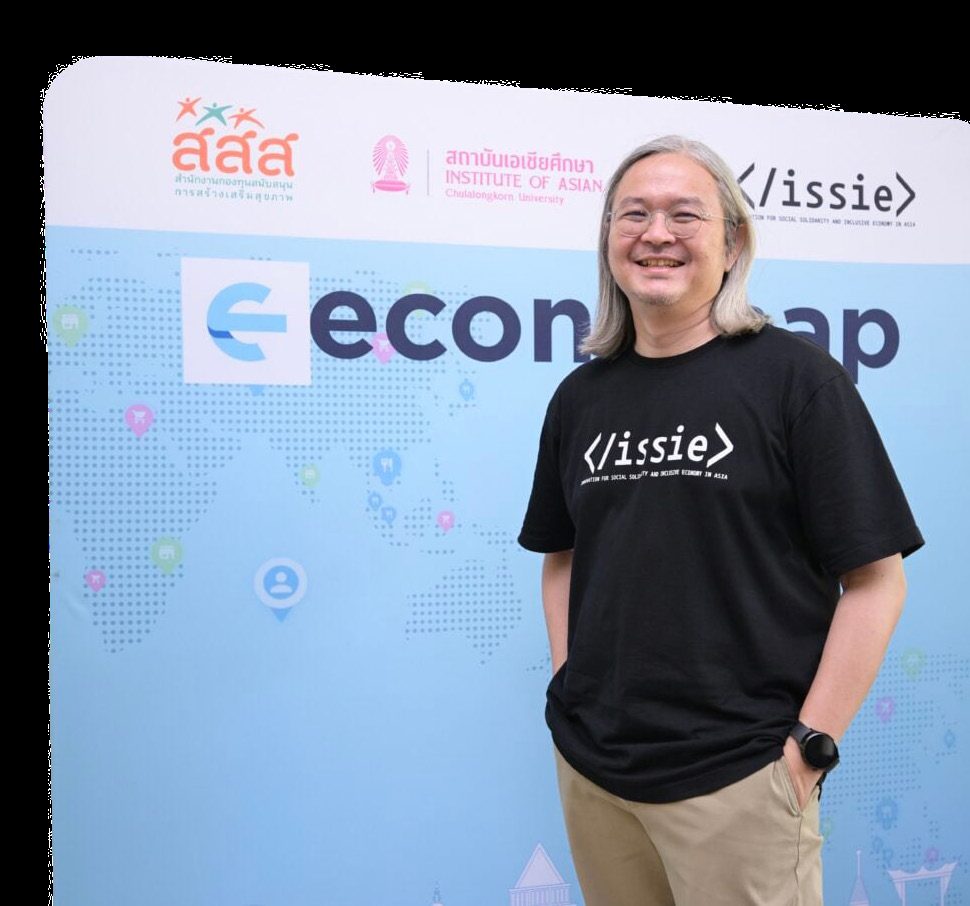
Akkanut Wantanasombut — researcher, Institute of Asian Studies, Chulalongkorn University
“We wanted data that sits close to people's lives — something the people who live there can actually pick up and use, that actually opens a door for the economy on their street.”
Akkanut Wantanasombut
Who does the data belong to?
Data has become a resource on the order of capital or labour. And platforms now mediate more of an ordinary day every year — the meal, the journey, the purchase, the appointment.
The convenience is real. So is the question sitting underneath it. All that information — generated by people, shops, workers, whole neighbourhoods — is being turned into value for somebody. How much of it finds its way back to where it came from?
ThaiEconoMap started there. The premise is straightforward: data shouldn't be locked inside a handful of large platforms. It should be something people can reach, look after together, and turn into opportunity of their own.
It began with a delivery app
Before ThaiEconoMap there was Tamsang-Tamsong — a delivery platform built so that neighbourhood restaurants and motorcycle taxi riders would have a channel of their own.
Commercial delivery was expanding fast at the time. Restaurants pushed prices up to cover the commissions, customers paid the difference, and plenty of riders were putting in longer hours to earn the same money.
From there the idea widened — from a way to order dinner into a shared record of an entire local economy. That became ThaiEconoMap.
Presenting the project
“We started from a problem you could see plainly. The restaurants, the riders and the customers were all absorbing the cost of how the big platforms are built. So we wanted to find out what happens when a community has a tool of its own.”
The grocery truck, and the data that changed a day
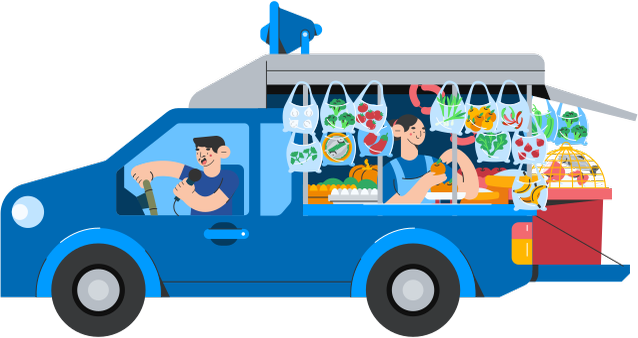
In a lot of places the mobile grocery truck isn't a convenience — it's infrastructure. Especially for older residents, people who can't leave the house, people confined to bed, and the family members looking after them.
The trouble is the timing. The truck comes early one day and late the next, so nobody knows when to go out and wait. ThaiEconoMap gave the trucks a way to broadcast their position, and now people can watch one coming in real time.
“To some people this sounds like a small thing. For an older person, or someone caring for a patient, knowing where the truck is and when it will arrive changes how the whole day works.”
A map of routes, or a map of a life?
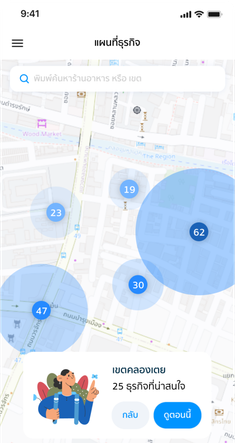
ThaiEconoMap is a web application with the map at the centre — the place where a neighbourhood's economic and social information collects. Restaurants, community businesses, grocery trucks, job openings, local service providers, and whatever people are offering to share.
A shop that never made it onto a big platform. A producer with no advertising budget. A service nobody outside the area has heard of. All of them can be recorded — and, finally, found.
“Most of the time the grassroots economy isn't short on capability. It's short on visibility. Put the information where people can see it and they find the shops, the services and the openings that were there all along.”
Good data comes from people who live there
Wrong information is worse than none: it misleads, and it costs the whole thing its credibility. So submissions get checked before they go public.
Data stewards can be appointed at area level — a district at a time — to review what residents send in. The reasoning is simple enough: nobody understands a place better than the people in it.
In conversation with people from the area
“If it's the community's data, the community should have a hand in looking after it. They're the ones who know whether that shop is still open, whether that road is passable, what's actually worth recording.”
Research that leaves the building
What sets this apart from a lot of technology research is that it didn't stop at a working prototype. Every community turned out different. In some, shop owners were already fluent with digital tools. In others, that fluency was the constraint.
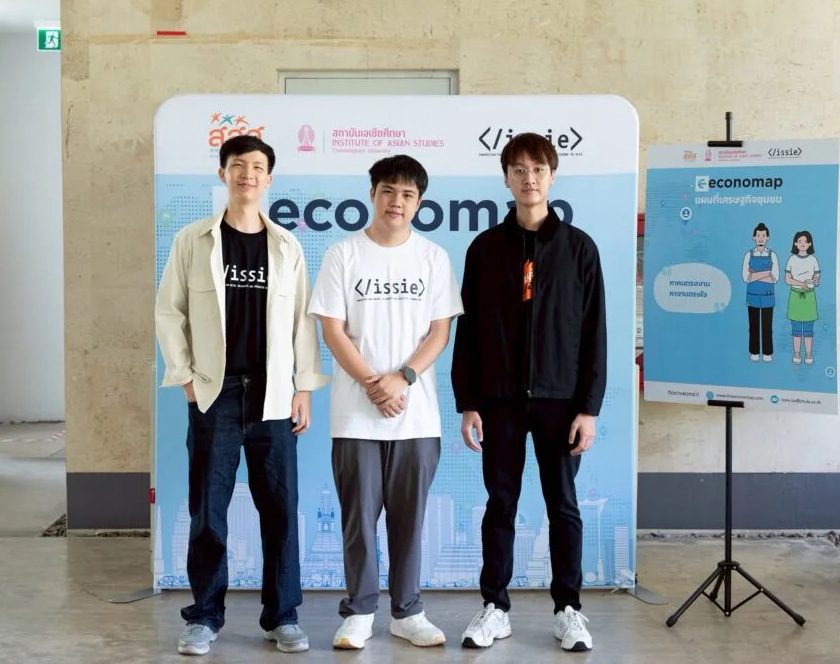
So in some districts the team worked with secondary schools. Students surveyed the businesses around them and entered the records for owners who couldn't yet do it themselves. The platform got its data — and the students got a much closer look at the place they live.
From grocery trucks to the local bus
One direction from here is to take the tracking that works for grocery trucks and point it at local public transport — the songthaew pickups upcountry, where a route might run a few times a day and nobody can say when.
Live positions would let people plan a journey, wait less, and actually get where they're going. A small, concrete use of spatial data on a problem people meet every day.
A community that owns its own future
ThaiEconoMap isn't only a digital map, or a directory of local businesses, or a piece of technology research. It's a social experiment with one question at the centre: if people can help build and use the data about their own lives, what changes?
At a moment when data is one of the world's most valuable resources, this is an attempt to make it something other than an asset for large organisations — to make it infrastructure that narrows a gap, generates income, and improves how people actually live.
“Having a platform isn't the point. Making it belong to people is — something a community helps steer, and shares in.”
Akkanut Wantanasombut
Contact us
Questions, or want to work with us?
Whether you're a community thinking about using the platform, a researcher, a local authority, or simply someone with a question about the project — write to us. We read everything that comes in.